
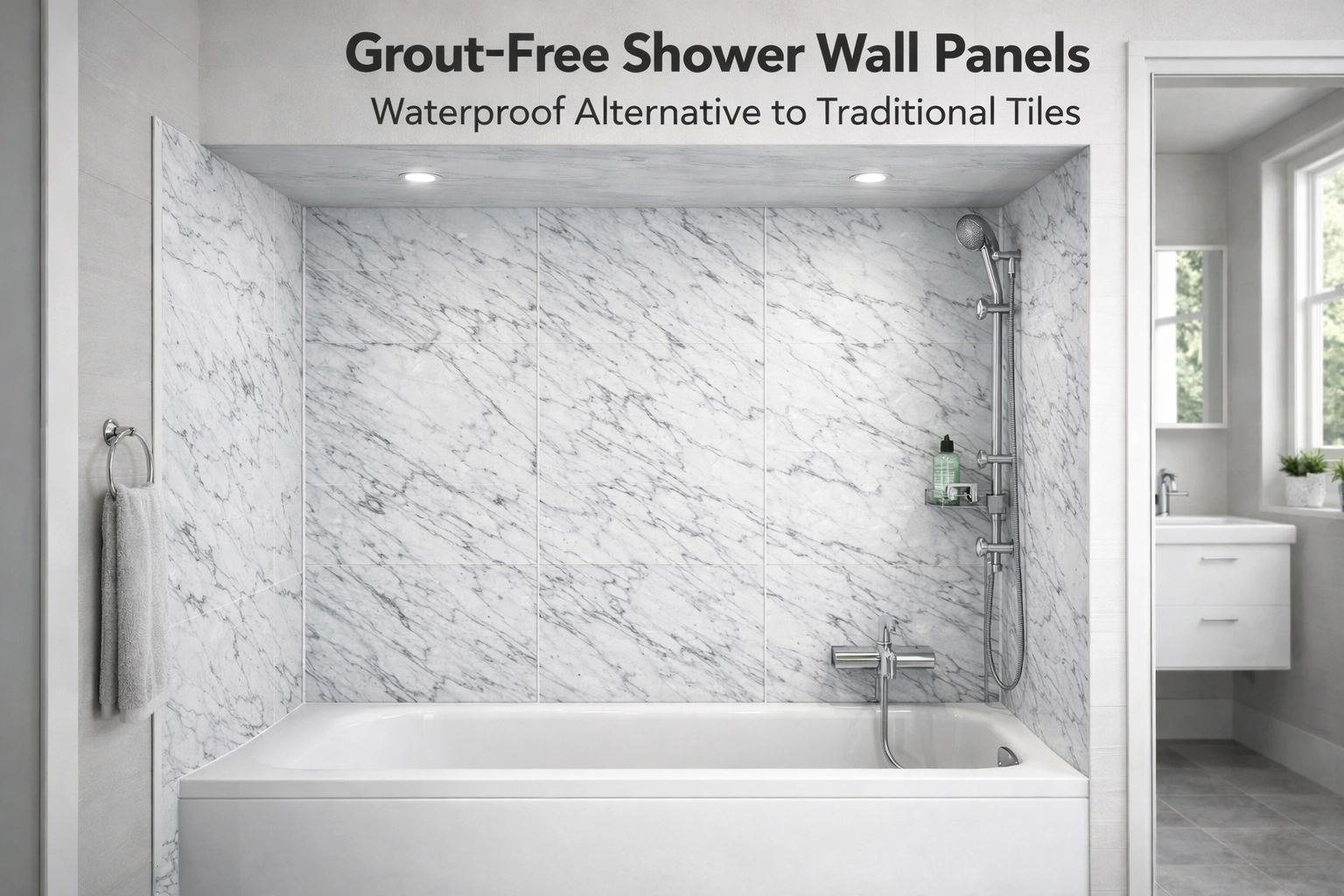
If you have ever spent a Saturday morning scrubbing discolored grout lines with an old toothbrush, you already understand the biggest weakness of traditional tile. Grout traps moisture, stains easily, and makes mold prevention much harder over time. Shower wall panels offer a smarter solution because they remove most of these joints and create a smooth, waterproof surface that is much easier to maintain.
More homeowners and renovation professionals now choose shower wall panels because they combine modern design with strong moisture protection. Whether you select lightweight PVC, sleek acrylic, or high-end laminate, the main advantage remains the same: a non-porous wall covering that helps protect the structure behind your bathroom walls and reduces cleaning time dramatically.
PVC, Acrylic, or Laminate Shower Wall Panels: Choosing the Right Material
If budget is your main concern or you need a lightweight option for an easy installation, PVC sheets for showers are often the most practical choice. These panels are usually hollow and simple to handle, which makes them a popular option for quick bathroom upgrades and rental property renovations. They are affordable, but they can feel a little less solid than denser products.
If you want better quality and a more premium finish, acrylic and laminate shower wall panels are stronger alternatives. Acrylic provides a glossy and fully waterproof finish, while laminate panels can recreate the look of natural stone or marble. These are excellent options if you want shower wall panels that look like tile while keeping installation and maintenance much easier.
- Good (Hollow PVC): Lowest cost, lightweight, and suitable for fast renovations.
- Better (Solid Acrylic): Mid-range price, durable finish, and modern appearance.
- Best (Composite or Laminate): Higher investment, premium look, and stronger impact resistance.
If you want to compare other interior wall solutions, you can also review PVC marble sheets for indoor decoration or explore related decorative surfaces on ArchDaily.
Can Shower Wall Panels Be Installed Over Existing Tiles?
One of the biggest advantages of shower wall panels is that they can often be installed directly over old tiles. This saves time, avoids demolition, and reduces mess during the renovation process. In many situations, the existing wall surface can act as a stable base for waterproof bathroom panels.
However, proper preparation is essential. If the old tiles are loose, cracked, or bulging, the new panels may not sit correctly. Before installation, make sure the surface is solid, flat, and clean.
- Solid Grip: Existing tiles must be firmly attached to the wall.
- True Flatness: The surface should be even and stable.
- Clean Surface: Remove soap residue, wax, and dust before applying adhesive.
Most systems use tongue and groove interlocking systems to create a tighter fit between panels. In addition, applying a high-quality silicone sealant for waterproof joints helps stop water from reaching the wall behind the surface.
Shower Wall Panels Sizes: From 4×8 Sheets to Seamless Finishes
Large-format shower wall panels are popular because they reduce the number of joints in the bathroom. Standard waterproof bathroom wall panels 4×8 feet often match typical residential wall heights, which helps create clean and more seamless finishes.
For a standard shower alcove, only a few panels may be needed to cover the entire area. Fewer joints mean fewer weak points for moisture and less long-term maintenance. This is one of the main reasons why large shower wall panels are preferred over traditional tiling in many modern bathrooms.
Premium shower wall kits also provide better durability, especially in busy bathrooms where the walls are exposed to regular impact from bottles, elbows, and daily use. If long-term resistance matters, pay attention to thickness, surface finish, and core density.
Shower Wall Panels vs Tile: Cost, Maintenance, and Long-Term Value
At first glance, traditional tile can seem cheaper than shower wall panels. However, the full installation cost is often much higher once waterproofing materials, labor, grout, and finishing time are included. Tile usually requires more time and more skilled labor, while panel systems are much faster to install.
| Feature | Ceramic Tile & Grout | Wall Panel Systems |
|---|---|---|
| Installation Time | 3–5 days | 4–8 hours |
| Labor Cost | High | Low |
| 10-Year Upkeep | Re-grouting and sealing | Simple wipe-down cleaning |
The maintenance savings are also important. Because shower wall panels create non-porous surfaces, they are easier to clean and do not require the same level of upkeep as tile and grout. This makes them a very attractive option for homeowners looking for a durable and low-maintenance bathroom solution.
For additional inspiration on bathroom renovation trends, you can also consult Houzz.
How to Plan a Shower Wall Panels Installation in 48 Hours
Planning a bathroom renovation with shower wall panels starts with accurate measurements. Once you know the dimensions of your walls, you can choose the right panel size, material, and adhesive system for your layout.
Whether you choose PVC, acrylic, or laminate, the goal is the same: install a fully waterproof wall surface that looks elegant and saves time during maintenance. If you want to explore more decorative interior solutions, you can also review indoor wall panel applications on our website.
With the right preparation and the right product, shower wall panels can transform a bathroom in a single weekend. Instead of spending years cleaning grout and fighting moisture issues, you get a cleaner, more durable, and more modern solution that is designed for everyday use.
