
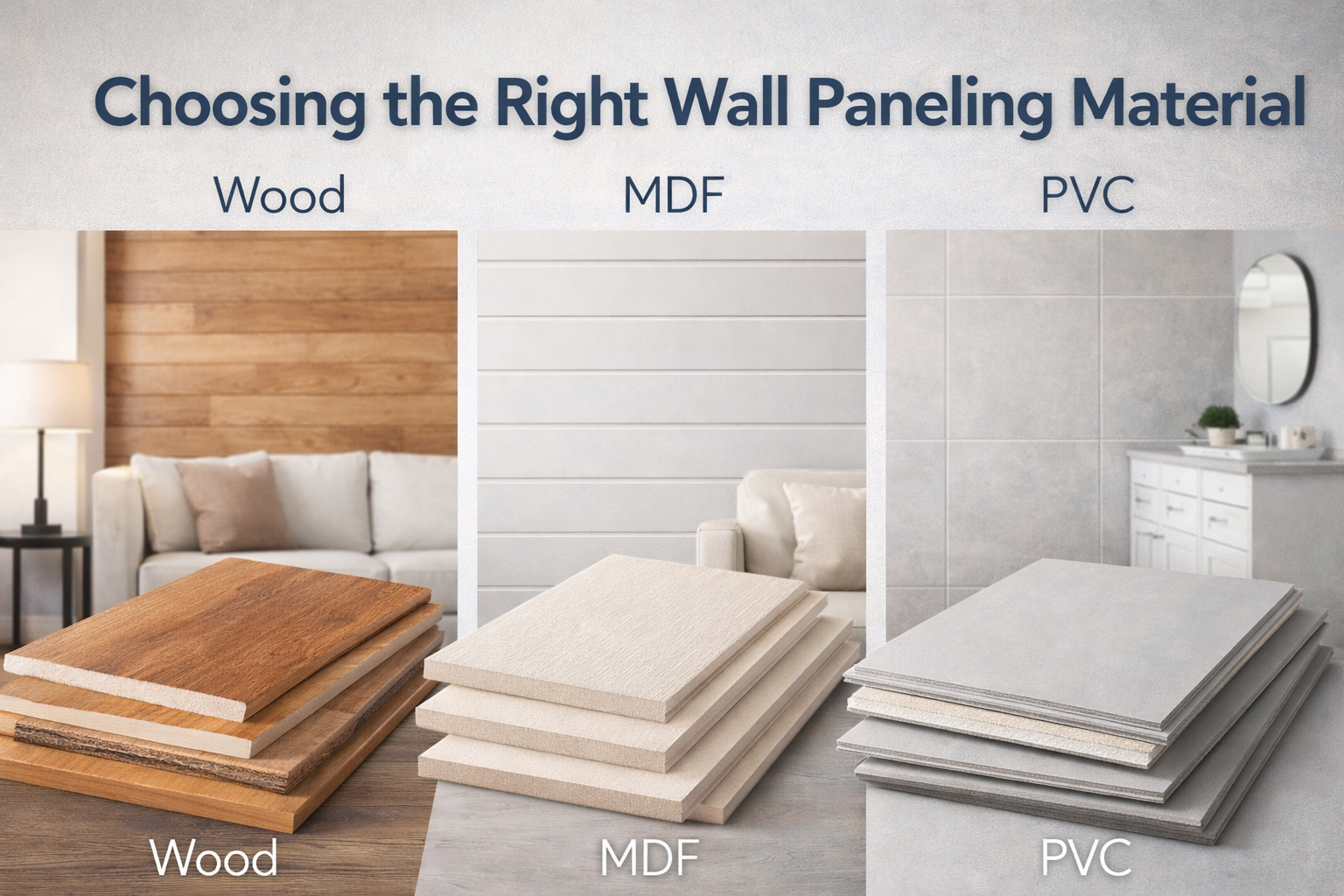
Choosing the right wall paneling material can transform your space while improving durability and insulation. We’ve all admired stunning room makeovers online, but turning those ideas into reality often feels complex. High-quality wall cladding does more than decorate. It protects your walls and hides imperfections.
Before starting, it is important to understand how different materials behave. Matching the correct substrate to your interior panels helps you avoid costly mistakes and ensures long-term performance.
Wood, MDF or PVC: Choosing the Right Wall Paneling Material
Selecting the right wall paneling material depends on your budget and your room conditions. Each option offers different benefits.
- Solid Wood: Premium and durable. It brings natural warmth but reacts to humidity.
- MDF: Affordable and smooth. It is ideal for painted finishes in living areas.
- PVC: Waterproof and lightweight. It is perfect for bathrooms and humid spaces.
For more details on materials, you can consult this guide on
architectural materials trends.
Best Wall Paneling Material for Bathrooms and Basements
Humidity plays a key role when choosing a wall paneling material. Standard wood absorbs moisture and may deform over time. PVC panels offer full waterproof protection. Moisture-resistant MDF is also suitable for basements.
To ensure durability, always check product specifications and installation recommendations. You can explore our
WPC wall panel solutions for moisture-resistant options.
Preparing Your Wall Paneling Material Before Installation
Proper preparation ensures your wall paneling material performs well over time. Wood panels need acclimation. Let them rest in the room for 48 hours before installation.
Different materials require different installation methods. MDF panels often use adhesive. Solid wood panels need mechanical fixing. Always leave a small expansion gap to avoid deformation.
Design Styles: Matching Wall Paneling Material to Your Interior
The style of your wall paneling material changes the entire room atmosphere. Shiplap offers a classic look. Slat panels provide a modern design with acoustic benefits. Smooth panels create a minimalist finish.
For inspiration, you can browse design ideas on
Houzz interior design platform.
- Vertical panels: Make ceilings look higher.
- Horizontal panels: Make rooms feel wider.
Wall Paneling Material Costs and Budget Planning
The cost of a wall paneling material includes more than just the panels. You must also consider trims, adhesives and finishes.
Raw wood requires painting and maintenance. Pre-finished panels reduce installation time. Planning these costs helps avoid surprises and keeps your project under control.
Your Checklist to Choose the Right Wall Paneling Material
Follow this simple plan to select the best wall paneling material:
- Evaluate: Check humidity and usage of the room.
- Compare: Analyze wood, MDF and PVC options.
- Prepare: Acclimate materials before installation.
By choosing the right material, you create a durable and stylish interior that lasts for years.
