
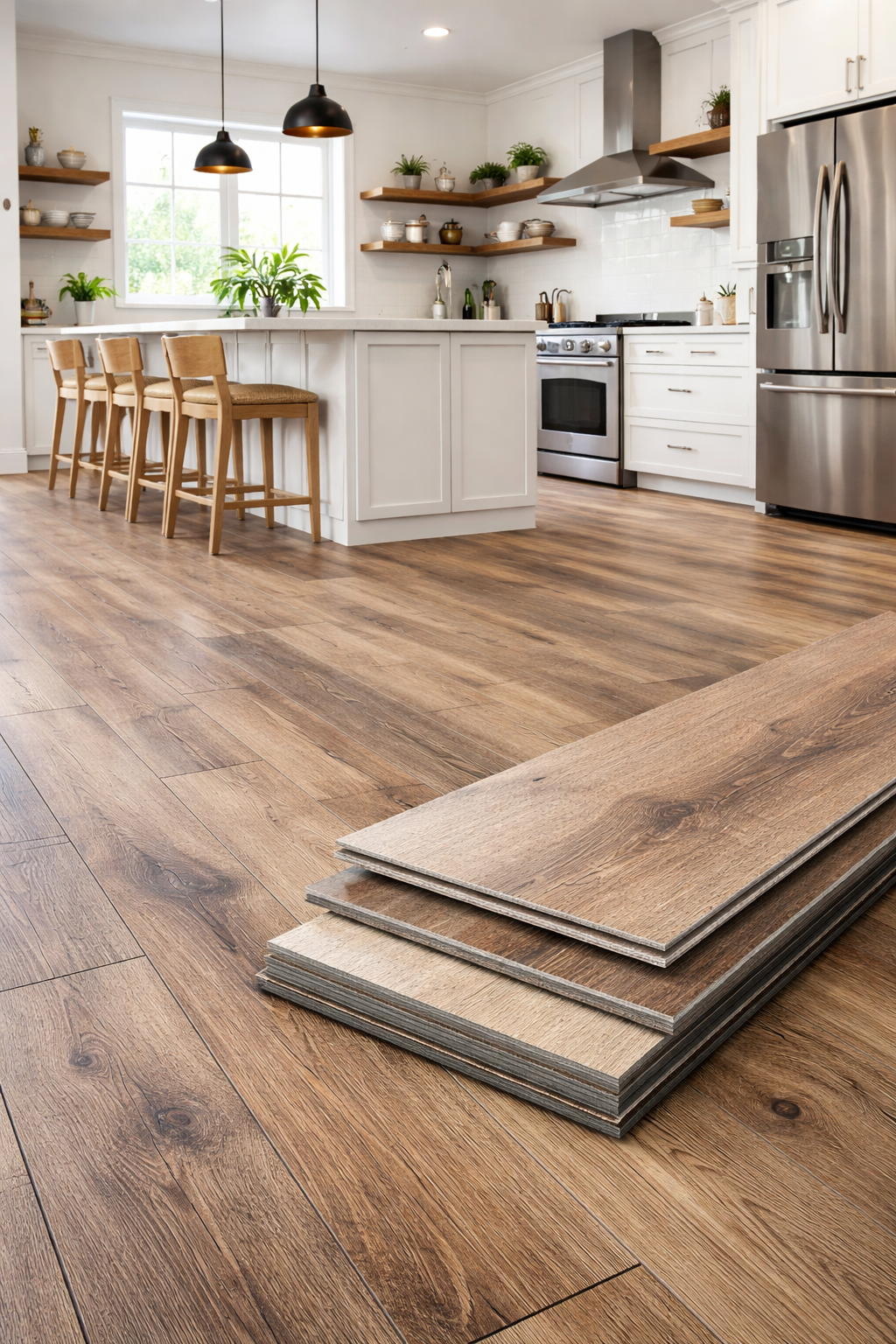
You likely know that water and wood don’t mix, yet the desire for rustic hardwood in kitchens and bathrooms remains high. For decades, renovation experts advised against this specific pairing to avoid warping, rot, and costly repairs caused by inevitable splashes or humidity.
SPC flooring changes these rules by engineering a solution that ignores moisture entirely. Short for Stone Plastic Composite, this material combines limestone dust and stabilizers to create an ultra-dense core that looks like timber but survives where natural wood cannot.
While older vinyl floors were flexible and prone to denting, this modern “rigid core” feels substantial and solid underfoot. Manufacturers designed waterproof SPC flooring (often labeled as SPC LVP flooring) to handle everything from basement floods to muddy paws, making it the new standard for durable home design.
The “Layer Cake”: What’s Actually Inside Your SPC Plank?
If you slice an SPC plank in half, you won’t see a solid block of material. It is actually a high-tech sandwich engineered to handle everything from muddy boots to dropped pans. Each layer in this “cake” has a specific job to keep your floors looking new and functioning properly.
The standard breakdown includes:
- The Wear Layer: A clear, invisible shield that blocks scratches, scuffs, and stains.
- The Vinyl Image: The high-resolution print that gives the floor its realistic wood or stone appearance.
- The SPC Core: The dense “backbone” made of limestone dust and plastic that provides structure.
- The Attached Pad: A built-in foam underlayment often pre-attached to the bottom for sound dampening and comfort.
The top layer is arguably the most critical for parents and pet owners. Think of the wear layer like the clear coat on a car; the thicker it is, the harder it is to scratch. This protection is measured in “mils,” and while a standard 12-mil coating works for guest rooms, you will want a 20-mil wear layer mil thickness for busy kitchens or homes with large dogs.
Supporting everything is the limestone core durability that gives this flooring its name. Because the core is stone-based rather than just plastic, SPC core flooring is rigid like a wood plank instead of floppy like a vinyl sheet. This stability is exactly why it survives in environments where laminate and traditional vinyl often fail.
Why the Stone Core Outperforms Traditional Vinyl and Laminate
Most flooring materials react to the weather like a wooden door that sticks in the humid summer heat. Laminate and WPC (Wood Plastic Composite) tend to absorb moisture and expand, which can eventually cause your beautiful new planks to buckle or gap at the seams. This is the biggest difference in the stone composite vs laminate debate: because SPC is made mostly of limestone, it remains completely stable whether your thermostat is set to 65 or 85 degrees. You simply won’t need to worry about the floor shifting or swelling when the seasons change.
Uneven subfloors have historically been a nightmare for vinyl installations. Old-school flexible vinyl would drape over every nail head or uneven seam, a problem known as “telegraphing” that makes a renovation look cheap. When comparing rigid core vs wpc or traditional luxury vinyl, SPC’s stiffness acts like a bridge over these minor imperfections. It provides a flat, smooth surface even if the concrete or plywood underneath isn’t perfectly level, saving you significant prep time and frustration during installation.
While this density makes the floor practically indestructible, it does mean the plank feels harder underfoot than softer, air-filled options. This firmness is often listed in waterproof vinyl flooring pros and cons guides as a necessary trade-off for superior dent resistance against heavy furniture. However, the core is only half the battle; to fully protect your investment from daily abuse, you need to select the right shield thickness for the surface.
Choosing the Right Thickness: 12-mil vs. 20-mil Wear Layers
Most shoppers assume a thicker plank automatically means a stronger floor, but that is a common misconception. The durability against scratches and scuffs actually comes from the “wear layer,” a transparent protective coating measured in mils (distinct from the plank thickness in millimeters). Think of this wear layer mil thickness like the screen protector on your phone: while the rigid core prevents the floor from breaking, this top coating prevents the surface from getting ugly.
Choosing the right thickness is a balancing act between maximum protection and your budget. A higher mil rating increases the SPC vinyl flooring price, but it acts as necessary insurance against claw marks and heavy foot traffic. Use this guide to match the spec to your room:
- 12-mil: Ideal for guest rooms, home offices, and low-traffic areas.
- 20-mil: Essential for homes with large dogs, energetic kids, or main living areas.
- 22-mil+: Reserved for commercial spaces or entryways that see muddy boots daily.
While the best SPC vinyl flooring brands will clearly label these specs, generic options often hide a thin 6-mil layer behind a low price tag. Once you have selected a floor tough enough to handle your daily life, the next step is saving money on the labor to put it down.
DIY Tips: How Click-Lock Planks Save You $2,000 in Labor
One of the biggest financial advantages of SPC click plank flooring is the ability to bypass professional installation fees, which can often double the cost of a renovation. Unlike older flooring types that required messy glues or hundreds of nails, modern SPC uses a floating “tongue-and-groove” system. You simply angle one plank into another and lower it until you hear a satisfying snap, locking them together like puzzle pieces. This user-friendly design puts a high-end look within reach of the average weekend warrior.
Because SPC is rigid—acting more like a stone slab than a flexible rubber mat—it requires a flat surface to perform correctly. If your subfloor has significant dips or humps, the stiff planks cannot bend to match the curve, creating hollow spots that sound cheap or “bouncy” when walked on. Leveling subfloor for vinyl is the most critical prep step; taking the time to fill low spots with a patching compound ensures your new floor feels solid and supports the locking mechanism properly.
Time is another hidden cost in renovations, and Stone Plastic Composite offers a distinct advantage here as well. While traditional hardwood often requires days to adjust to your home’s humidity, the vinyl plank acclimation time for SPC is significantly shorter—usually just 12 to 24 hours. Since the stone core does not absorb moisture or expand dramatically like wood, you can often buy your materials on Saturday morning and start laying them down the next day.
To ensure you are ready to tackle this project yourself, follow this simple preparation guide before learning how to install click lock planks:
- Check the Flatness: Use a long level or straight board to find uneven spots exceeding 3/16 of an inch.
- Undercut Door Jambs: Saw off the bottom of door frames so planks slide neatly underneath for a clean edge.
- Gather Tools: Have a rubber mallet, tapping block, and utility knife ready for cuts.
Your 3-Point Checklist for the Perfect SPC Purchase
You no longer have to guess which floor will survive your lifestyle. For busy spaces like kitchens, prioritize the best SPC flooring with a 20-mil wear layer, even if SPC flooring prices run slightly higher. Choosing the right specifications ensures your investment handles pet claws and daily spills without showing age, turning a simple renovation into a long-term solution.
When deciding where to buy SPC vinyl flooring, inspect the box labels for transparent core thickness and wear layer specs. Your ultimate success is measured by peace of mind; knowing a sudden dishwasher leak is just a mess to wipe up, not a disaster that ruins your week.