
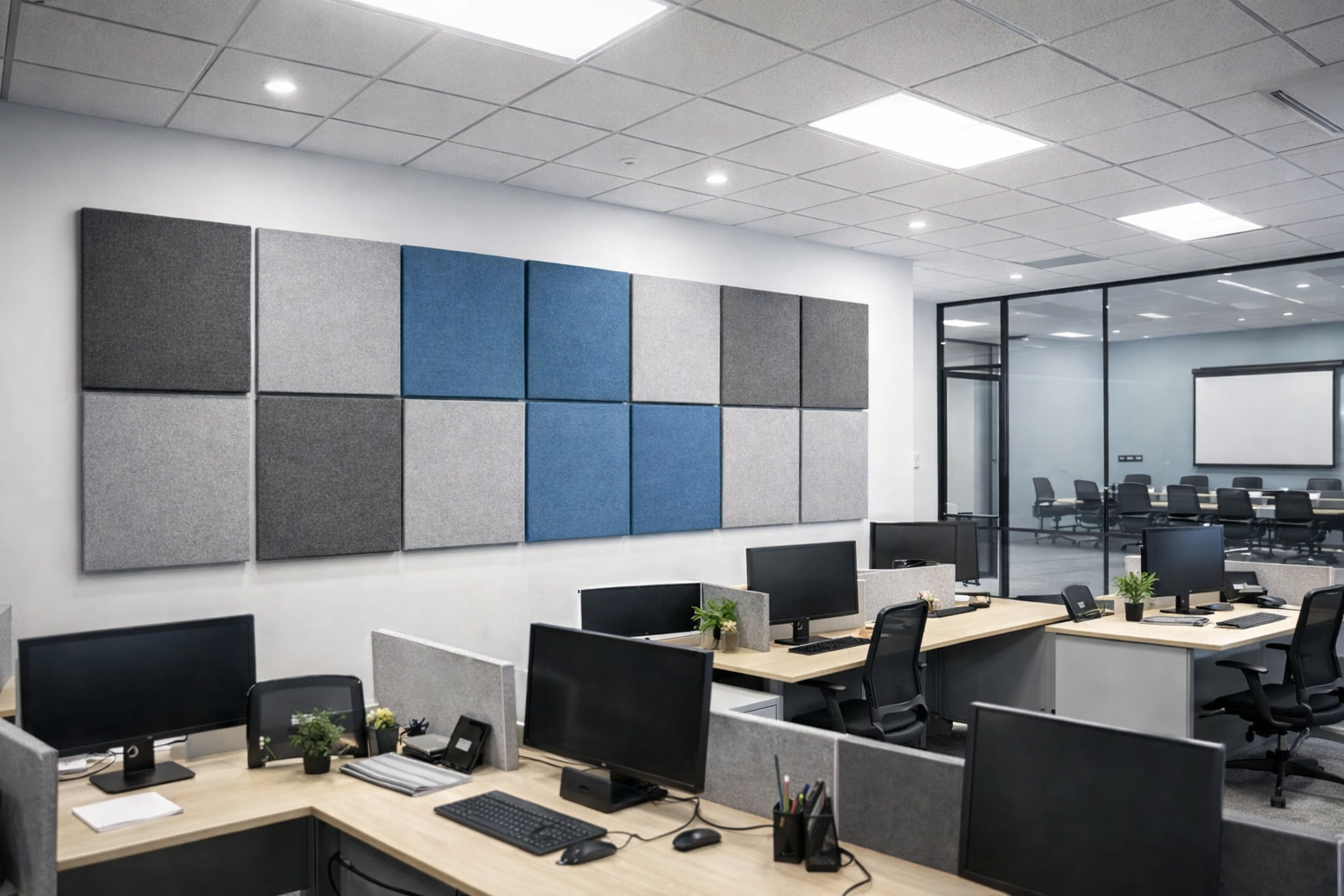
Sound absorbing panels are one of the most effective ways to reduce echo and improve comfort in modern interiors. Have you ever stepped into a sleek restaurant, office, or meeting room and realized you had to raise your voice just to be heard? In most cases, the real problem is not loud people, but the room itself. Hard surfaces such as glass, drywall, tile, and concrete reflect sound again and again, which creates a harsh and tiring acoustic environment.
Think of your voice like a tennis ball thrown against a wall. On a hard surface, it rebounds instantly and chaotically. By contrast, properly selected acoustic treatment works like a catcher’s mitt and stops that rebound before it spreads across the room. That is why sound absorbing panels are widely used in offices, restaurants, studios, and residential spaces where clear speech and a calmer atmosphere matter.
Why Sound Absorbing Panels Matter in Modern Interiors
Many people confuse sound absorption with soundproofing, yet the two serve very different purposes. Absorption improves the sound quality inside a room by reducing echo and reverberation. Soundproofing, on the other hand, aims to block noise from passing through walls, floors, or ceilings.
If your home office sounds hollow on video calls or your living room feels noisy even with only a few people inside, the issue usually comes from reflected sound. In that case, sound absorbing panels are often the right solution because they control the acoustic bounce that makes rooms feel louder than they really are.
- Sound absorption: improves clarity, reduces echo, and makes speech easier to understand.
- Soundproofing: reduces sound transfer between separate rooms or buildings.
Understanding this difference helps avoid expensive mistakes. If your goal is to create a quieter and more comfortable space rather than rebuild walls, acoustic treatment is usually the smarter first step.
How These Acoustic Panels Work
When sound waves hit a hard, flat surface, they reflect back into the room. When that happens repeatedly, voices blur together and the room feels sharp, busy, and fatiguing. Acoustic panels interrupt this process by absorbing part of the sound energy instead of letting it bounce back.
Dense materials such as polyester fiber, mineral wool, or fiberglass are especially effective because they trap sound energy inside their structure. This reduces reverberation and improves speech clarity. If you want a technical overview of this principle, you can also refer to this resource on acoustic panels.
In practical terms, this means conversations become easier to follow, online meetings sound more professional, and the room feels more controlled. That is why these products are used in spaces where both comfort and communication are important.
Choosing the Right Material for Acoustic Performance
Not all acoustic products perform the same way. Foam is often chosen for budget setups because it is lightweight and easy to install. However, denser materials usually absorb a wider range of frequencies and perform better in real workspaces or living areas.
Fabric-wrapped panels filled with mineral wool or fiberglass often provide stronger overall results than thin foam, especially in rooms where lower voices, HVAC noise, or general crowd noise are present. Decorative polyester products can also work well when design matters as much as function.
If appearance is important, you may want to look at our acoustic panels collection and compare finishes, colors, and panel styles designed for modern interiors.
Where to Place Sound Absorbing Panels for the Best Results
Even high-quality products can underperform if they are placed randomly. Placement matters because most distracting reflections happen at the first points where sound bounces from walls or ceilings back to your ears.
A simple way to find these spots is the mirror method:
- Sit in your normal listening or working position.
- Ask someone to slide a mirror along the wall at ear level.
- Mark the position where you first see the speaker, monitor, or major sound source reflected.
- Center your panel in that zone.
In many rooms, covering just 15% to 20% of the reflective surface area can already improve clarity significantly. Therefore, you do not always need to cover every wall. A focused installation often delivers better visual balance and strong acoustic improvement at the same time.
If you are planning a larger interior upgrade, you can also combine acoustic treatment with decorative wall finishes such as WPC wall and ceiling cladding for a more cohesive design result.
Decorative Options That Do Not Ruin Your Design
One of the biggest reasons people delay acoustic treatment is aesthetics. Many still imagine dark studio foam or bulky technical boards. Today, that is no longer the only option. Decorative products now come in geometric shapes, fabric finishes, printed surfaces, and custom colors that work well in offices, meeting rooms, lounges, and homes.
Because of this evolution, sound absorbing panels are no longer just technical tools. They can also function as part of the room’s design language. In some spaces, they appear as clean architectural features. In others, they act more like framed wall art while still improving acoustic comfort.
For projects that need both performance and visual consistency, it also helps to review our contact page to discuss suitable panel sizes, finishes, and installation ideas.
How to Read Acoustic Performance Without Overcomplicating It
When comparing products, many buyers look at NRC ratings. The Noise Reduction Coefficient gives a quick indication of how much sound a material absorbs. For example, an NRC of 0.80 means the product absorbs about 80% of the sound energy that hits it.
You do not need the highest number in every room. For many home offices, meeting rooms, and residential interiors, a balanced specification is more useful than an extreme one. The goal is not to make the room feel unnaturally dead. The goal is to reduce harsh reflections and create a more comfortable acoustic environment.
Your Practical Action Plan
If you want to improve a noisy room without major construction work, start with three steps:
- Identify the problem: echo, speech clarity, or general harshness.
- Choose the right product: denser decorative panels for broad performance.
- Place them correctly: treat first reflection points before adding extra coverage.
Used correctly, sound absorbing panels can transform a room from tiring and noisy into focused, comfortable, and professional. They do not just change how a space sounds. They also change how people work, speak, and feel inside it.