
Best Soundproof Wall Panels for Peaceful Sleep: NRC vs STC Explained
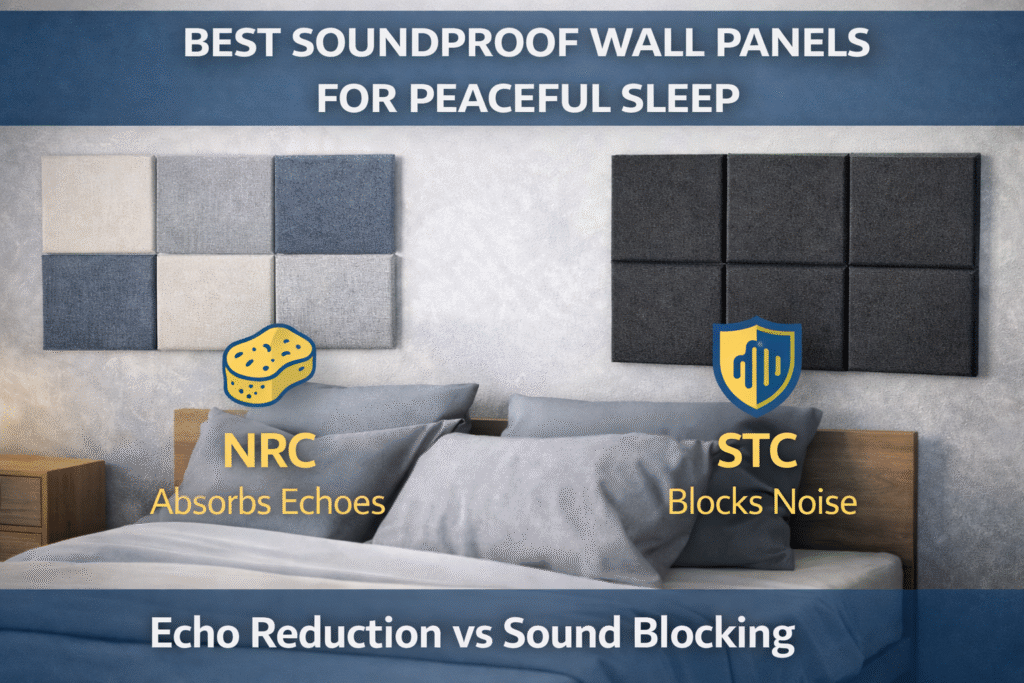
You tried earplugs. The 6:00 AM garbage truck still wakes you up. Searching for the best soundproof wall panels often starts with a mistake. People buy cheap foam expecting silence. Acoustic pros separate two concepts. Absorption reduces echoes inside the room. Blocking reduces noise entering from outside. If you want more practical guides, browse our Blog. For a trusted overview of noise exposure and why blocking matters, see NIOSH guidance: NIOSH noise topic. The Physics of Peace: Using the Sponge and the Shield to Quiet Your Room Think of absorption as a sponge. It soaks up reflections and reduces echo. Think of blocking as a shield. It stops sound transmission through walls. NRC: This measures echo absorption inside a room. It helps with reverb and snoring tone. STC: This measures sound blocking through walls. It helps with voices and traffic noise. If you hear clear words, you need more STC. If you hear hollow echo, you need more NRC. Heavy-Duty Defense: High-Density Panels for Blocking Traffic and Neighbors Low frequency noise needs mass. Dense materials reduce transmission better than foam. This is why heavy panels often work best for bedrooms. Rockwool: High density and strong for voice blocking. It can be heavy. Fiberglass: Effective for STC upgrades. It can irritate skin. Polyester: Safer to handle. It is weaker for deep bass rumble. Mass Loaded Vinyl adds more mass. Decoupling clips reduce vibration transfer through studs. This combo can improve results a lot. If you work on technical specs and compliance, review our Certifications page. Renter-Friendly Solutions: Decorative Art and Adhesive Tiles for Snoring and Echo Renters can still reduce echo. Use absorption near the bed and first reflection points. Choose panels that look like decor, not studio foam. Prep: Apply wide painter tape on the wall. Stick: Add mounting tape on top of the painter tape. Mount: Press lightweight tiles firmly into place. The Gap Factor: Strategic Placement and Installation to Prevent Sound Leaks Sound leaks through gaps like water. Seal door cracks and window gaps first. Then place panels where reflections hit first. Use the mirror method. Sit on the bed and slide a mirror on the wall. When you see the noise source, place absorption there. From Tossing and Turning to Total Quiet: Your Personalized Soundproofing Roadmap Start with gaps and the wall behind your headboard. Then upgrade in steps. You will feel improvements faster. $50: Add weatherstripping to doors and windows. $200: Add fiberglass boards to reduce echo and improve speech blocking. $500+: Add dense systems with MLV and decoupling clips. If you want help choosing a durable solution for a project, contact our team: Contact us.
