
Soundproof Panels: How to Reduce Echo and Improve Room Acoustics
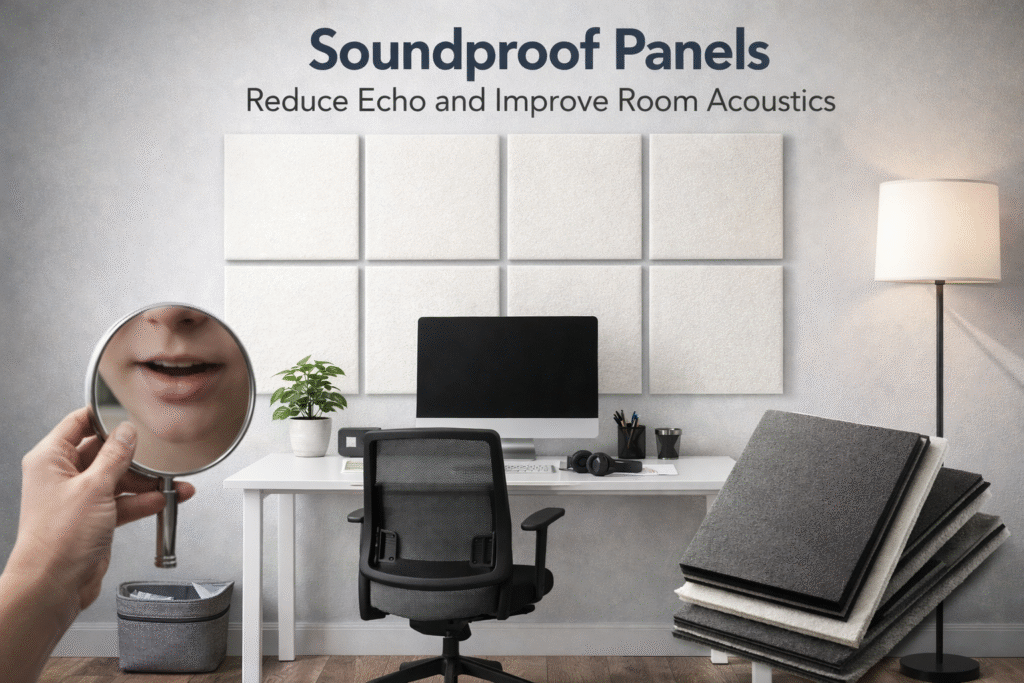
Soundproof panels help reduce echo and improve sound clarity in any room. If your office sounds like a tiled bathroom during calls, you are dealing with acoustic reflection. A simple clap test can reveal the issue. If the sound lingers, your walls are reflecting noise instead of absorbing it. Fixing this problem does not require a fully silent room. Instead, you need to control how sound behaves. The right soundproof panels can absorb echo and create a more comfortable space for work or recording. Soundproof Panels vs Acoustic Panels: Understanding the Difference Many people confuse soundproofing with sound absorption. However, soundproof panels and acoustic panels serve different purposes. Sound absorption panels: Reduce echo inside a room. Soundproof panels: Block sound from entering or leaving a space. If your goal is better call quality, absorption panels are enough. If you want to block external noise, you need dense materials like mass-loaded vinyl. To better understand acoustic principles, you can read this guide: Soundproofing basics. How Soundproof Panels Work with NRC Ratings When choosing soundproof panels, you will often see NRC ratings. This score shows how much sound a material absorbs. A panel with 0.80 NRC absorbs 80% of sound energy. It is important to compare NRC with STC ratings. NRC measures echo reduction, while STC measures sound blocking. Most lightweight panels focus on absorption, not isolation. Thicker panels perform better. One-inch panels handle high frequencies. Two- to four-inch panels absorb deeper sounds like voices and bass. Best Soundproof Panels Materials for Home and Office The material you choose affects both performance and design. The best soundproof panels combine efficiency with aesthetics. Acoustic foam: Affordable and easy to install, but limited performance. Mineral wool: High density and excellent absorption across frequencies. Fabric panels: Decorative and powerful, ideal for living spaces. Fire safety is also important. Always choose panels with a Class A fire rating. If you are also improving interior design materials, you can explore interior wall panel solutions for modern spaces. Where to Place Soundproof Panels for Best Results Correct placement is essential to maximize the performance of soundproof panels. The goal is to treat the first reflection points. You can easily find these points using the mirror trick: Sit in your normal position. Move a mirror along the wall. Mark where you see your reflection. Install panels at these spots. This method helps reduce echo quickly and improves sound clarity during calls or recordings. For more room design inspiration, you can also visit Houzz interior design ideas. How to Install Soundproof Panels Without Damage Installing soundproof panels does not need to damage your walls. Avoid strong adhesives that can peel paint. Instead, use mounting systems like Z-clips. These allow you to hang panels securely and remove them easily if needed. This solution works well for renters and temporary setups. Your Simple Plan to Improve Room Acoustics Improving your space with soundproof panels is straightforward. Focus on three steps: Choose the right material for your needs. Place panels at reflection points. Install them using safe mounting systems. After installation, repeat the clap test. A short, clean sound means your acoustic treatment works. With the right setup, soundproof panels transform noisy rooms into clear and comfortable environments.
